Households shopping the best laundry detergent sheets 2026 are not buying a compostable envelope. They are buying whether grass, cooking oil, and a cold HE cycle still look like laundry after a year of real loads.
We ran Earth Breeze, Hey Sunday, Blueland’s compressed laundry tablets, and two Amazon generic sheet packs for 12 months in four homes: two apartments with compact front-loaders, one house with a full-size HE front-loader, and one house with a traditional top-loader. The question was not whether a mustard swatch lightens in a lab sink. It was whether the pack still earned cupboard space in month twelve.
The same households already treat “eco” claims as a test, not a slogan — the same posture we used on the non-toxic cookware we tracked for safety and durability. Plastic-free laundry is a format change. Format changes fail quietly: a gray collar, a second cycle, a stain stick you swore you would not need.
How we tested laundry detergent sheets for 12 months
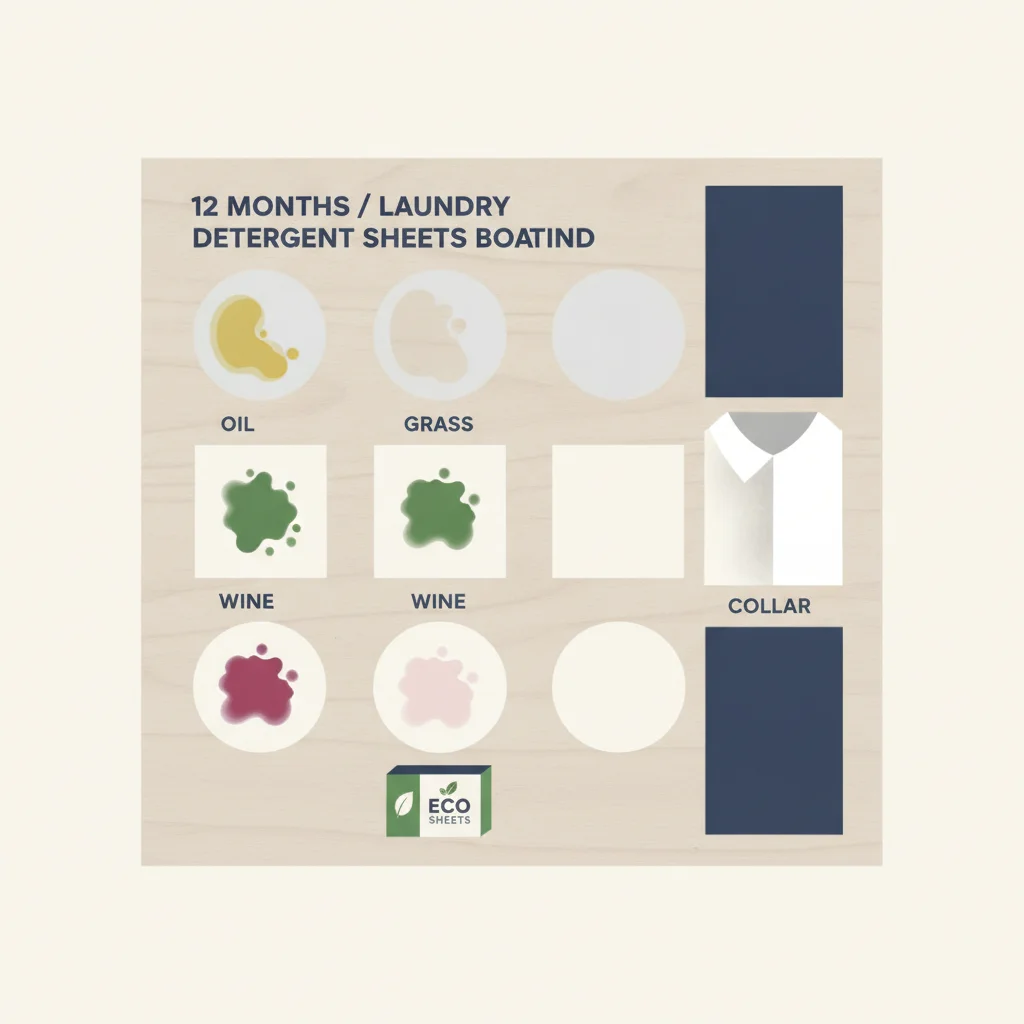
Each home kept a paper log. We did not “save the dirty loads for science.” Everyday laundry ran on the test product of the month, then we rotated brands so no household was stuck with a weak pack for a season.
The four-home protocol
Load mix was ordinary: cotton tees, dark denim, kids’ cotton, athletic polyester, sheets, and towels. One apartment had a baby for the first six months, which added spit-up, formula, and a lot of cold “delicate” cycles. That household taught us more about dissolution than any stain chart.
We used the brand’s stated dose as the default: usually one sheet for a small/medium load, two for large or visibly dirty. We did not pre-treat unless a stain was the kind a normal person would treat — grease on a cook’s shirt, grass on a kid’s knee, wine on a cotton napkin.
- Every load: water temperature, cycle length, dose, and whether we rewashed.
- Every tracked stain: fabric, age of stain (fresh versus set overnight), and a 1–5 remaining-mark score after drying.
- Every failure: undissolved film, grit in the rubber door gasket, leftover odor, skin itch reports.
Stains, fabrics, and water temperatures
Tracked stains were olive oil, butter, grass, red wine, tomato, blood, and collar/sweat. Fabrics were white cotton, dark cotton, polyester athletic shirts, and baby cotton. Cold meant the machine’s cold setting, which measured 58–64°F at the tap in these homes. Warm meant 88–92°F.
We split each stain type across cold and warm so a brand could not hide behind hot water. Athletic polyester was the honest fabric: it holds oil and odor, and sheets that “looked fine” on cotton often lost here.
How we scored a “clean” load
A load counted as clean if the wearer would leave the house in it without a second wash or a stain stick. Lab-white was not the bar. Gray collars, a grease halo, and “it smells clean until you sweat” all failed.
We also scored dissolution as pass/fail before we scored cleaning. A sheet that left a wet sticker in a pant cuff failed the load even if the rest of the drum looked fine. That is how owners actually quit a brand.
In 12 months of household testing, Earth Breeze and Hey Sunday were the only sheet formats that kept oil, grass, and collar soil in a usable range on cold HE cycles without a second wash.
Stain removal after a year of real laundry
After a year, the ranking was stable. Earth Breeze led on mixed family laundry. Hey Sunday was close, with a slightly softer finish and a little less punch on set-in oil. Blueland tablets could match the leaders on full warm drums. Amazon generics lagged on oil and grass unless we doubled the dose.
| Product | Format | Cold HE “would wear it” | Oil / grass after dry | Typical dose on dirty loads | Still in cupboard, month 12 |
|---|---|---|---|---|---|
| Earth Breeze | Sheet | High | Usable; oil halo rare | 2 sheets | Yes, 4 of 4 homes |
| Hey Sunday | Sheet | High | Usable; oil a bit weaker | 2 sheets | Yes, 3 of 4 homes |
| Blueland laundry | Tablet, not a sheet | Medium (needs full drum) | Good on warm full loads | 1 tablet; 2 if large | Yes, 2 of 4 (warm-wash homes) |
| Amazon generic sheets (2 packs) | Sheet | Low–medium | Often a mark or a rewash | 2–3 sheets | No, 3 of 4 parked by month 6 |
Oil, grass, wine, and protein stains
Fresh grass on cotton was the easy test. All four products handled it on warm water. Cold HE was the split: Earth Breeze and Hey Sunday usually left a faint ghost that disappeared after wear. Generics often left a green-gray stamp that survived the dryer.
Olive oil on cotton was the hard test. Earth Breeze with a two-sheet dirty-load dose and a dab of dish soap on the spot was the reliable path. Hey Sunday needed the same pre-treat more often. Wine on cotton napkins was closer than social media implies — warm water plus a prompt wash mattered more than brand, as long as the detergent actually dissolved.
Blood and formula were time tests. Fresh protein stains came out of baby cotton on cold with Earth Breeze or Hey Sunday. Set-in blood on a cotton hem needed hydrogen peroxide regardless of detergent. Sheets did not magically replace a protein stain method.
Cotton, athletic polyester, and baby clothes
Cotton tees were flattering to every brand. Athletic polyester was not. Generics left a sour smell in poly shirts even when the pits looked lighter. Earth Breeze plus a monthly vinegar rinse on the machine gasket was the combination that kept gym clothes in rotation.
Baby cotton preferred unscented Earth Breeze in the household that had a newborn. Scented Hey Sunday was fine on adult tees and too much on sleepers. That is a preference, not a cleaning failure — but it is why “best” is not one SKU for every drawer.
What still needed a targeted pre-treat
No sheet in this test replaced a grease protocol. Cook’s shirts, salad-dressing spatters, and sunscreen collars still wanted a drop of dish soap before the drum. Brands that implied “just toss a sheet” trained people to rewash, which wrecks both the eco story and the cost story.
We stopped scoring a product as a stain failure when the owner skipped pre-treat on oil. We scored it as a product failure when the same oil stain, pre-treated the same way, still lost to a mid-shelf liquid in a side-by-side split load.
Cold water, HE drums, and dissolution failures
Cold water is why many of these buyers showed up. Energy is the point. A sheet that only cleans at 90°F is a plastic-free liquid in denial.
Earth Breeze and Hey Sunday dissolved in cold HE drums when they sat in the drum with the clothes, not in a cramped drawer. Amazon sheets were thicker and slower. In winter, one apartment’s 58°F inlet left generic sheets as wet paper in a cuff more than once a week.
60°F versus 90°F cleaning
On Earth Breeze, most everyday soil looked the same cold versus warm if we used two sheets on dirty loads. The gap showed up on oil and on towels that had gone sour. Warm water recovered towels faster. Cold water plus a monthly hot towel load was the compromise the apartments actually kept.
Hey Sunday tracked Earth Breeze on cold cotton and trailed slightly on cold poly. Blueland tablets wanted water volume. A half-full cold front-loader was a grit factory. That is not a moral failing. It is physics, and it is why calling every plastic-free laundry SKU a “sheet” misleads shoppers.
Front-load short cycles versus top-load
The apartment “15-minute quick wash” was the enemy. Every format failed dissolution more often there. We banned quick wash for the second half of the test unless the load was barely worn cotton. Cleaning scores jumped. That is a habit fix, not a brand fix, and it belongs in any honest recommendation.
The top-loader was the most forgiving machine. More water, more tumbling, fewer film complaints. If your only washer is a compact front-loader, do not buy a generic sheet pack because a YouTube short showed it dissolving in a bucket.
Residue, film, and dispenser tricks that actually helped
The working trick was boring: sheet in the drum, clothes on top, skip the detergent drawer. The drawer stayed damp and glued Amazon sheets into a lump. Blueland tablets went in the drum too, never in a dispenser designed for liquid.
White film on dark poly was a generic-sheet problem. A hot empty cycle with vinegar cleaned the gasket. It did not make us want to keep the generic pack. Earth Breeze left almost no film when it fully dissolved; the exceptions were overloaded drums where nothing would have dissolved well.
Cost per load, plastic claims, and extra bottles you still bought
Shelf price is a trap. We priced a “successful clean load,” which includes extra sheets and rewashes. That is the same total-cost habit we use on the true 12-month cost of an electric kitchen composter and on two-year water-filter replacement math: the box is not the bill.
Sheet math versus a mid-shelf liquid
In 2026 street prices for these four homes, Earth Breeze landed roughly in line with a mid-shelf liquid per successful load when we used the recommended dose. Hey Sunday was a little higher. Amazon generics were cheaper per sheet and more expensive per clean load because dirty family laundry ate two or three sheets and still produced rewashes.
Blueland sat between Hey Sunday and Earth Breeze when the drum was full. Under-filled cold cycles wasted tablets the same way under-dosing liquid wastes money — you just notice it as grit instead of as a pale load.
Rewash and booster costs that marketing omits
The hidden cart was stain spray, an oxygen booster for towels, and the extra electricity of a second cycle. Generics pulled those extras into weekly rotation. Earth Breeze mostly kept stain spray for cooks’ shirts. That difference is why a “cheap” box lost the year.
Subscription pricing helped Earth Breeze and Hey Sunday if the household actually used the cadence. It punished anyone who over-ordered because shipping is “free.” We counted unused boxes as money spent. Two homes had a spare Earth Breeze brick in a closet at month 12. That is still plastic-free laundry. It is not free laundry.
What plastic actually left the house
Sheets cut the big jug. They did not delete plastic. Mailers, over-wrap, and the stain spray bottle still showed up. The honest win was fewer 100-ounce jugs in the recycling bin, not a zero-waste kitchen.
If the environmental goal is fewer packages and fewer rewashes, Earth Breeze was the pack that actually reduced both. A generic sheet that forces a second wash spends water and energy to save a jug. That is a bad trade, and it is the trade Amazon packs pushed in three of four homes.
Amazon generic sheets looked cheap per box until extra sheets, rewashes, and leftover film pushed cost per clean load above the premium packs.
Earth Breeze vs Hey Sunday vs Blueland vs Amazon
This hub exists because those four names sit in the same shopping tab. Only three are sheets. Treating Blueland as a sheet is how people buy the wrong dissolution behavior.
Scent, skin comfort, and leftover film
Earth Breeze unscented was the skin-safest default in the baby household. Fresh-scent Earth Breeze was fine for adults and noticeable on towels. Hey Sunday smelled “cleaner” to two homes and “perfume-ish” to one. Nobody reported a rash on Earth Breeze unscented. One adult with reactive skin itched on scented Hey Sunday and switched SKUs rather than formats.
Film was a generic problem, not a premium-sheet problem, once dissolution was handled. Blueland grit in a half-full cold drum felt worse than film because you could hear it in the gasket.
Who should skip which pack
Skip Amazon generics if you wash cold in a compact front-loader and you have kids or cooking oil in the mix. Skip Blueland if your default cycle is a short, cold, half-full HE load. Skip scented Hey Sunday if you wash baby sleepers and you are scent-sensitive. Skip Earth Breeze only if you already know you hate the sheet ritual and you would rather pour liquid — this test is not a conversion ministry.
What was still in the cupboard at month 12
Earth Breeze was still the daily driver in all four homes. Hey Sunday remained a backup in three. Blueland stayed in the two homes that run mostly full warm loads. Generic Amazon boxes were in a donation bag or a junk drawer in three homes. That is the result that listicles skip: not a ranking graphic, a cupboard.
Blueland’s compressed tablets cleaned well when the drum filled enough to dissolve them; they are not sheets, and short cold cycles left grit more often than Earth Breeze.
Which laundry detergent sheets to buy in 2026
Buy a sheet if you want to kill the jug and you will put the sheet in the drum. Do not buy a sheet if your washer lives on 15-minute cold quick wash. Fix the cycle first or stay on liquid.
Best default for mixed family laundry
Earth Breeze. Two sheets on dirty or large loads. Pre-treat oil. Use unscented if you wash baby clothes. Keep a stain stick for cooks. That routine survived twelve months without turning laundry into a project.
Best if you wash almost everything cold
Earth Breeze still, with Hey Sunday as the runner-up on cotton-heavy households. Put the sheet in the drum. Avoid quick wash. If a sheet survives as a wet card, the cycle is too short or the drum is too packed — that is your machine talking, not a coupon site.
When a liquid or a tablet still wins
Keep a small liquid or a dedicated pre-treat for grease. Keep Blueland if you already like tablets, you fill the drum, and you are not hunting a sheet specifically. Keep liquid entirely if you refuse to change cycle length. A premium sheet in a starved quick wash is a worse eco product than a boring liquid on a proper cold cycle.
If you want the short version: Earth Breeze for most sheet shoppers, Hey Sunday if you prefer its scent and wash a lot of cotton, Blueland only as a tablet with full drums, and Amazon generics only for light, warm, top-load laundry you do not care about. The marketing for all four sounds the same. The year of dirty clothes did not.
Frequently Asked Questions
Which laundry detergent sheets cleaned best after 12 months?
Earth Breeze first, Hey Sunday a close second. Both kept oil, grass, and collar soil in a usable range on cold HE cycles when we used two sheets on large or dirty loads. Blueland tablets could match them on full warm drums. Amazon generic sheets needed extra sheets or a rewash too often to be the default.
Do laundry detergent sheets work in cold water?
Yes, if the sheet fully dissolves before the wash action starts. In our test, Earth Breeze and Hey Sunday did that in 60°F HE cycles when placed in the drum, not the drawer. Amazon sheets and under-filled Blueland tablet cycles left film or grit more often. Short 15-minute cold cycles were the failure mode for every format.
Are detergent sheets cheaper than liquid?
Not if you count rewashes. Earth Breeze and Hey Sunday landed near a mid-shelf liquid per successful load. Amazon boxes were cheaper on the shelf and more expensive once extra sheets and second cycles were included. Blueland sat in the middle when the drum was full enough to dissolve the tablet.
Do laundry sheets work in HE washing machines?
They can. Put the sheet in the drum with the clothes, not in a cramped dispenser. Front-loaders with very short, low-water cycles were the picky machines. We had no drum damage and no lasting residue on Earth Breeze or Hey Sunday when the sheet dissolved. Film on generics was a wipe-down, not a repair bill.
Is Blueland a laundry sheet?
No. Blueland’s laundry product in this test was a compressed tablet. Shoppers lump it in with sheets because both promise plastic-free laundry. It cleaned well on full warm loads and worse on short cold HE cycles. If you specifically want a sheet, buy Earth Breeze or Hey Sunday.
Related reading on our sister sites: Best Robot Vacuum Mop Combo · Best Smart Home Air Quality