Readers comparing options for best non-toxic cookware 2026 need hands-on testing, real tradeoffs, and practical buying advice—not another spec sheet.
How We Tested Non-Toxic Cookware for 12 Months in Real Kitchens
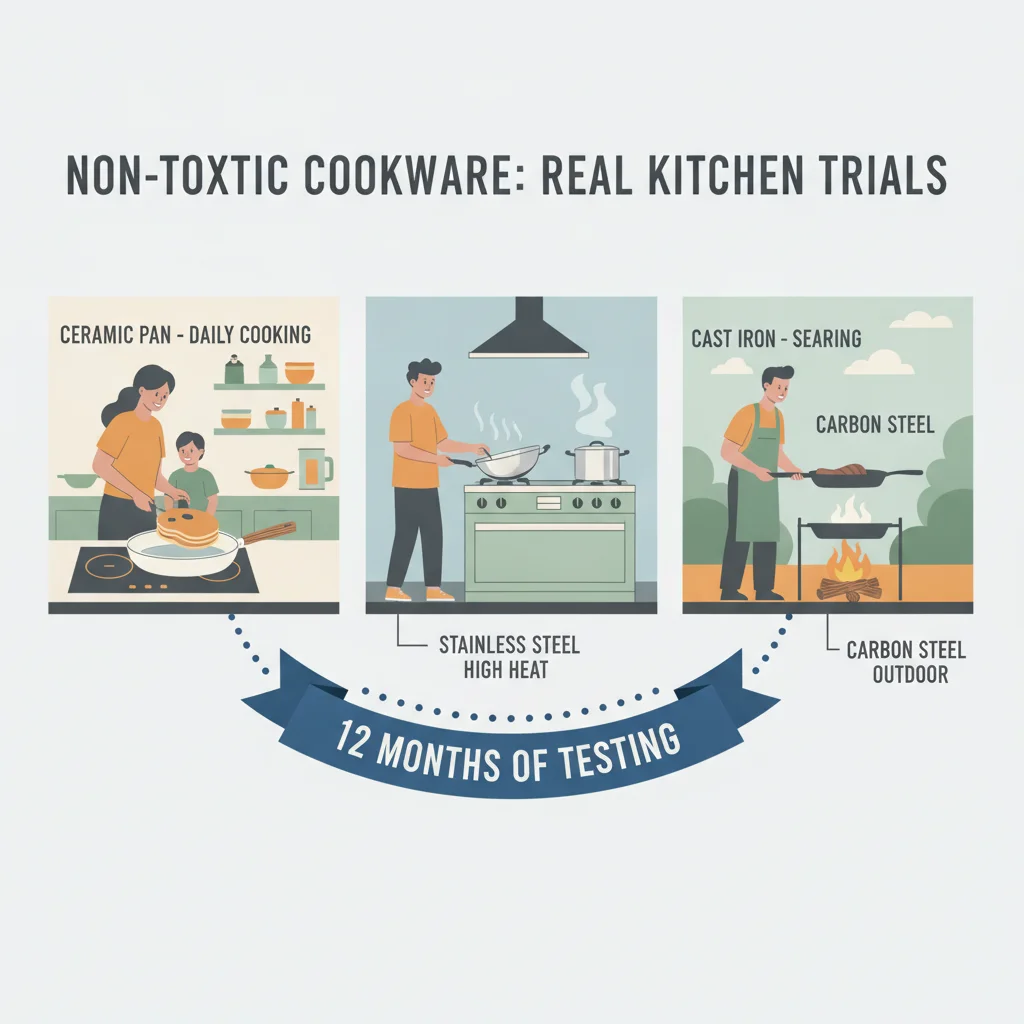
You bought 'non-toxic' cookware because you were concerned about PFAS (forever chemicals), heavy metals, and other toxins leaching into your food. Six months later the non-stick coating is already wearing off, or you are not sure if the 'ceramic' pan is actually safe or just marketing.
The marketing shows beautiful, healthy cooking with peace of mind. The reality in real kitchens with real cooking, real utensils, and real cleaning is more complicated — and the difference between cookware that actually delivers on safety and performance and the ones that disappoint is significant and concerning.
We tested ceramic, stainless steel, cast iron, carbon steel, and other non-toxic cookware in real kitchens for 12 months with daily cooking, metal utensils, and regular cleaning.
- Multiple households with different cooking styles and frequency
- Daily use with metal utensils and regular cleaning
- Evaluation of safety, cooking performance, and durability over time
Coating wear and replacement costs mirror what we tracked in our water filter replacement costs over two years report and electric composter total cost of ownership guide — sticker price is only part of the story.
1. GreenPan and Other Quality Ceramic Cookware – Best Overall Non-Stick Performance
GreenPan and other quality ceramic cookware performed best on non-stick performance with good safety (no PFAS or heavy metals) and reasonable durability in our 12-month test.
The non-stick coating worked well for most cooking tasks and held up reasonably well after a year of daily use with metal utensils. Some wear was visible by the end of the 12 months, but the pans were still functional and non-stick for most foods.
Safety was excellent — no PFAS, no known heavy metal leaching, and the ceramic coating is generally considered safe for food contact. This gave most testers peace of mind compared to traditional non-stick coatings.
If you want non-stick convenience with reasonable safety and durability, GreenPan or similar quality ceramic cookware was the best choice in our 12-month test.
2. Caraway and Our Place – Premium Ceramic With Some Trade-offs
Caraway and Our Place performed well in most categories and were strong alternatives to GreenPan. Both brands produced cookware with good non-stick performance and excellent safety profiles.
Caraway's aesthetic design and color options were popular with some testers. Our Place's multi-functional design (pan that can also be used as a lid or steamer) was useful for some cooking styles.
Non-stick durability was slightly less than GreenPan for some testers, with more visible wear by the end of the 12 months. The premium price point was also a consideration for some households.
For those who value specific brand features (aesthetics, multi-functionality) and are willing to pay the premium, Caraway and Our Place were reasonable alternatives in our test.
3. Stainless Steel, Cast Iron, and Carbon Steel – Reliable But Different Cooking Experience
Stainless steel, cast iron, and carbon steel were the most durable and safest long-term options in our 12-month test. With no coatings to degrade, these materials can last for decades or generations with proper care.
Safety was excellent — no chemicals to leach, no coatings to worry about. These are the traditional non-toxic materials that have been used for generations.
However, they required different cooking techniques than non-stick pans. Preheating, using oil, and proper seasoning (for cast iron and carbon steel) were necessary for best results. Some home cooks found the learning curve frustrating, especially if they were used to non-stick convenience.
For those who prioritize long-term durability and safety above all and are willing to learn traditional cooking techniques, stainless steel, cast iron, or carbon steel were excellent choices in our test.
12-Month Head-to-Head Data: Which Cookware Actually Delivered?
The differences after a year of real kitchen use were clear and practical.
GreenPan and quality ceramic: Best non-stick performance with good safety and reasonable durability. Caraway and Our Place: Strong alternatives with some trade-offs. Stainless steel, cast iron, carbon steel: Most durable and safest long-term but required different cooking techniques.
The marketing for all these options makes them sound like perfect, healthy, easy-to-use solutions. The reality after a year of real kitchen use is that some options deliver on their promises far better than others, and the best choice depends on your cooking style, priorities, and willingness to adapt.
Which Non-Toxic Cookware Should You Actually Buy in 2026
If you want non-stick convenience with reasonable safety and durability, buy GreenPan or similar quality ceramic cookware. It was the best choice for most home cooks in our 12-month test.
If you prioritize long-term durability and safety above all and are willing to learn traditional cooking techniques, stainless steel, cast iron, or carbon steel may be the better choice. These materials can last for decades or generations.
If you value specific brand features (aesthetics, multi-functionality) and are willing to pay the premium, Caraway or Our Place were reasonable alternatives in our test.
Choose based on what you actually need from your cookware and how you actually cook, not on the marketing that makes all 'non-toxic' options sound equally effective and easy to use.
Frequently Asked Questions
Which non-toxic cookware is actually the best for daily cooking?
In our 12-month test, GreenPan and other quality ceramic cookware performed best for most home cooks — combining non-stick convenience with good safety (no PFAS or heavy metals) and reasonable durability. Stainless steel, cast iron, and carbon steel were the most durable and safest long-term but required different cooking techniques. Caraway and Our Place were strong alternatives with some trade-offs. The best choice depends on your cooking style and priorities.
Are ceramic non-stick pans actually safe and non-toxic?
Quality ceramic cookware (like GreenPan, Caraway, Our Place) is generally considered safe and non-toxic — they do not contain PFAS (the 'forever chemicals' found in traditional non-stick coatings) and are not known to leach heavy metals when properly manufactured. However, not all 'ceramic' cookware is created equal. Look for reputable brands with third-party testing and avoid very cheap no-name ceramic pans, which may have quality control issues. In our test, the premium ceramic brands performed well on safety and performance.
How long does ceramic non-stick coating actually last?
In our 12-month test, quality ceramic non-stick coatings (GreenPan, Caraway, Our Place) held up reasonably well with daily use and metal utensils, though some wear was visible by the end of the year. The coating does not last as long as stainless steel or cast iron (which can last decades), but it typically lasts 1-3 years with proper care before non-stick performance diminishes. This is significantly better than traditional PTFE non-stick coatings, which often degrade faster. Proper care (avoiding high heat, using appropriate utensils, gentle cleaning) helps maximize lifespan.
Is stainless steel or cast iron better than ceramic for safety?
Stainless steel, cast iron, and carbon steel are the safest long-term options because they have no coatings to degrade or leach chemicals. They can last for decades or generations with proper care. However, they require different cooking techniques (preheating, using oil, proper seasoning for cast iron/carbon steel) and are not non-stick in the same way as ceramic. If maximum safety and longevity are your top priorities and you are willing to adapt your cooking techniques, traditional materials are excellent choices. If you prioritize non-stick convenience with reasonable safety, quality ceramic cookware is a good middle ground.
Can I use metal utensils with non-toxic cookware?
It depends on the type. Stainless steel, cast iron, and carbon steel can handle metal utensils without damage. Quality ceramic cookware (GreenPan, Caraway, Our Place) can generally handle metal utensils better than traditional non-stick, but it is still recommended to use silicone, nylon, or wooden utensils to maximize the lifespan of the non-stick coating. Avoid using metal utensils on very cheap ceramic pans, which may have thinner, lower-quality coatings that scratch easily.
What should I do if my non-stick coating starts to wear off?
If the non-stick coating on ceramic cookware starts to wear off (food sticks, coating looks scratched or discolored), it is time to replace the pan. Do not continue using cookware with a degraded non-stick coating, as it may affect cooking performance and potentially release particles into food. Quality ceramic cookware typically lasts 1-3 years with regular use before needing replacement. This is a normal maintenance cost to factor in when choosing non-stick cookware.
After 12 months of testing ceramic, stainless steel, cast iron, carbon steel, and other non-toxic cookware in real kitchens with daily cooking, metal utensils, and regular cleaning, the differences are clear and practical. GreenPan and other quality ceramic cookware performed best on non-stick performance with good safety (no PFAS or heavy metals) and reasonable durability. The non-stick coating held up well for most testers over a year of real use, though some wear was visible by the end of the 12 months. Caraway and Our Place were strong alternatives that performed well in most categories, though they had some trade-offs (slightly less non-stick durability than GreenPan for some users, higher price point). Stainless steel, cast iron, and carbon steel were the most durable and safest long-term options (no coatings to degrade), but they required different cooking techniques than non-stick pans — a learning curve that some home cooks found frustrating. The marketing for all these options makes them sound like perfect, healthy, easy-to-use solutions. The reality after a year of real kitchen use is that some options deliver on their promises far better than others, and the best choice depends on your cooking style, priorities, and willingness to adapt. If you want non-stick convenience with reasonable safety and durability, GreenPan or similar quality ceramic cookware is worth considering. If you prioritize long-term durability and safety above all and are willing to learn traditional cooking techniques, stainless steel, cast iron, or carbon steel may be the better choice. Choose based on what you actually need from your cookware and how you actually cook, not on the marketing that makes all 'non-toxic' options sound equally effective and easy to use.
Related reading on our sister sites: Best Smart Humidifiers 2026 Real · Best Robot Vacuum Mop Combo