The 12-Month Test in a Real Large Household
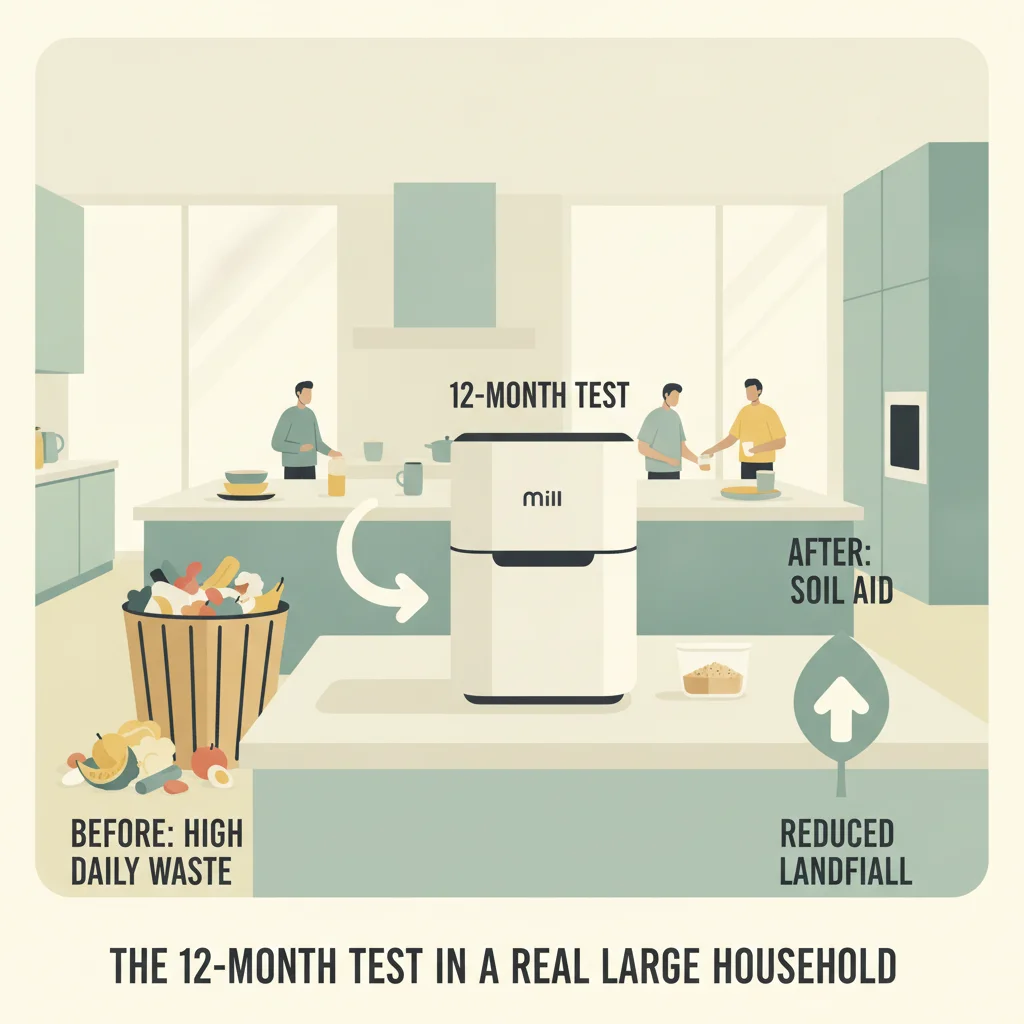
This guide covers mill food recycler review 12 months with real-home testing notes, ownership costs, and the trade-offs that matter after months of use.
You have a large family that cooks every day and throws away a lot of food scraps. You saw the Mill Food Recycler advertised as the high-capacity solution that can handle everything without constant emptying. You paid the premium price (plus the subscription) and installed it in your kitchen. Twelve months later the machine is still running, but you are wondering if the high cost and the ongoing subscription are actually justified by the performance.
We ran the Mill in a real large household for a full year with daily food waste from a busy family that eats meat, dairy, and vegetables. Here is what actually happened over 12 months.
- Household of 5-6 people cooking most meals at home
- High daily food waste volume including meat, bones, and dairy
- Full tracking of performance, odor, noise, maintenance, and all costs
Capacity and Daily Performance With High Volume
The Mill's large capacity was genuinely useful in a high-waste household. It could go several days between emptying even with substantial daily food scrap volume, which was a real convenience compared to smaller machines that needed more frequent attention.
During peak periods (holidays, large gatherings), the machine handled the increased load without issues. The output quality remained consistent even when the machine was running near capacity for extended periods.
The high capacity is the Mill's strongest feature and the main reason some large households find it worth the premium price.
Odor, Noise, and Kitchen Experience Over Time
Odor and noise were generally well-controlled for the machine's size and capacity. The Mill was not as quiet as Lomi in our four-way composter comparison, but it was acceptable in a busy family kitchen and did not generate complaints from other household members or neighbors.
Odor was noticeable during some cycles (especially with high volumes of meat and fish), but it was not overwhelming and dissipated quickly. The machine's design and filtration system did a good job containing smells in a real kitchen environment.
Over 12 months, the day-to-day experience remained consistent. There was no significant degradation in odor or noise control over time.
Maintenance and Reliability After 12 Months
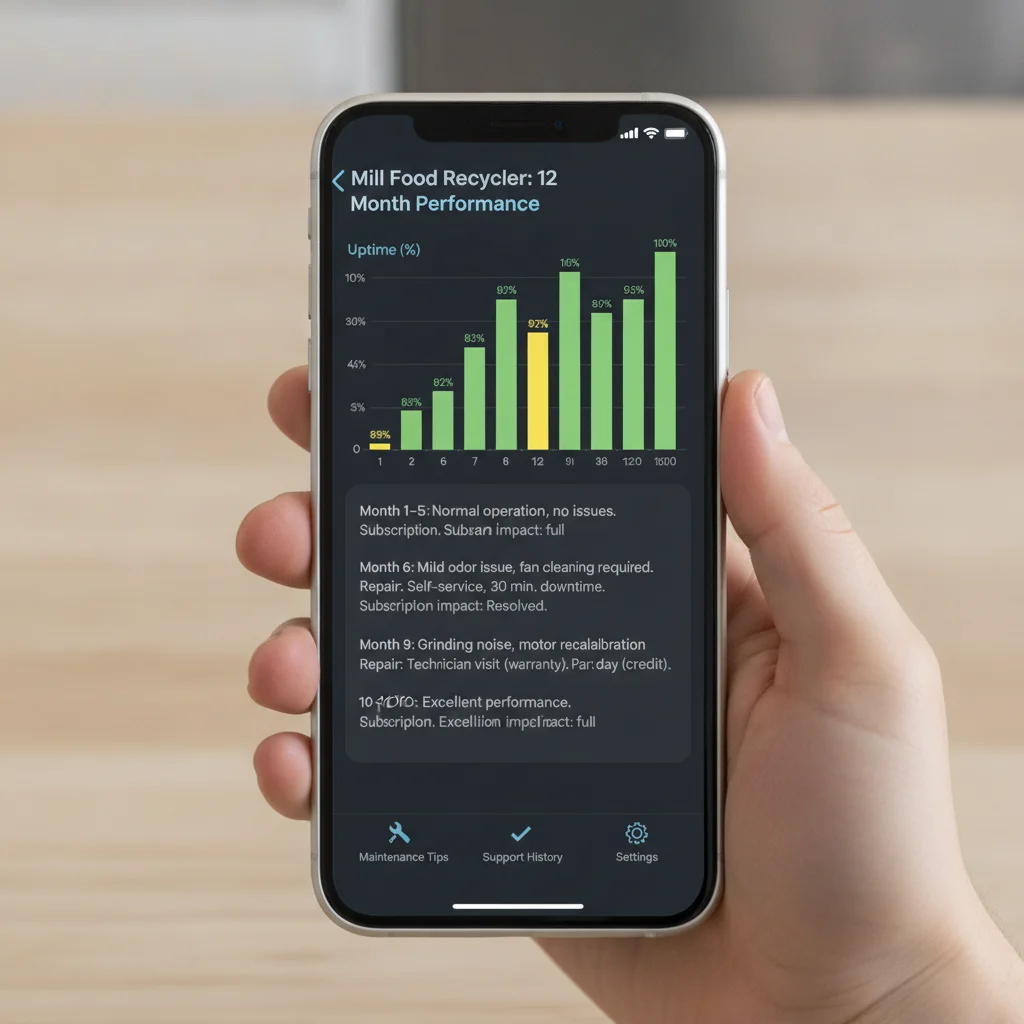
The Mill was reliable over the full 12 months with minimal issues. The main ongoing requirement was the subscription, which some users found frustrating compared to one-time purchase machines.
Regular maintenance was straightforward (filter changes, occasional cleaning). There were no major repairs needed during the test period. The machine continued to perform consistently from month 1 to month 12.
The subscription model was the most polarizing aspect of ownership. Some users appreciated the included support and updates. Others resented the ongoing cost for a device they had already purchased.
Output Quality and Garden Usability After a Year
The Mill's output after 12 months of high-volume use was acceptable as a soil amendment but not as high quality as Lomi's. It broke down in garden soil and provided some benefits, but it was not the best performer in our garden tests.
For a large household that prioritizes capacity and convenience over maximum output quality, the Mill's performance was perfectly adequate. The material was usable in the garden, just not the absolute best among the machines we tested.
Is the Mill Food Recycler Worth the Price After 12 Months?
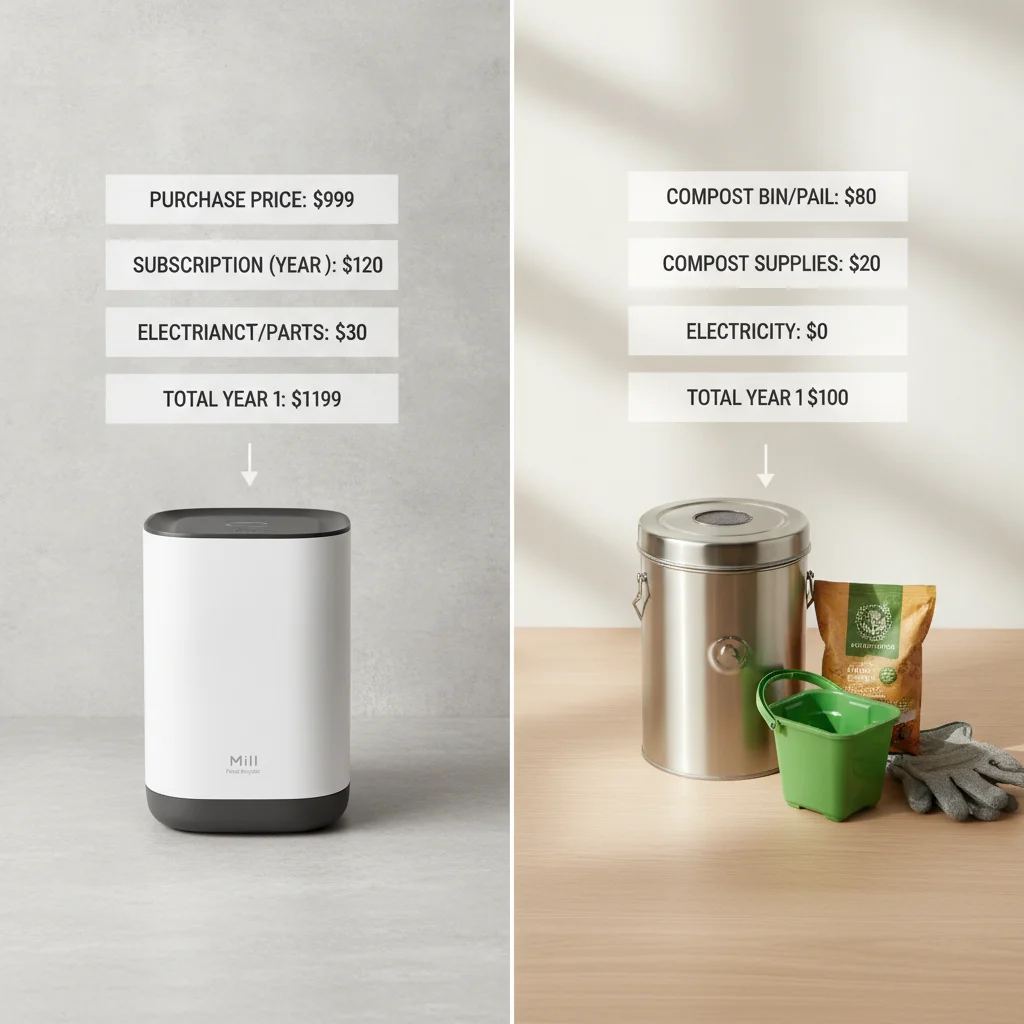
After a full year of real large-household use, the answer depends on your specific situation.
If you generate a lot of food waste daily, value the convenience of high capacity with infrequent emptying, and are okay with the subscription model, the Mill can be worth the premium. The machine is well-engineered and reliable.
If you could achieve similar results with Lomi, Reencle, FoodCycler, or budget alternatives at a lower total cost, the Mill's price premium may not be justified. The performance is good, but it is not dramatically better than less expensive alternatives in most categories.
The Mill is a premium product for a specific use case. Whether that use case matches your household is the key question after 12 months of real data.
Frequently Asked Questions
Is the Mill Food Recycler worth the high price for a large family?
It depends on your waste volume and how much you value convenience. In our 12-month test with a large household, the Mill handled high daily volumes well with minimal maintenance. However, the combination of high upfront cost and ongoing subscription made it significantly more expensive than alternatives like Lomi or Reencle. If you generate a lot of food waste and hate emptying the machine, it may be worth it. For most households, less expensive options deliver similar or better results.
How much does the Mill subscription actually cost over a year?
The subscription is a significant ongoing cost that adds up over time. When combined with the high purchase price, the total 12-month cost of ownership was substantially higher than most other electric composters in our test. Many users found the subscription model frustrating compared to one-time purchase machines.
Does the Mill actually handle more waste than Lomi or Reencle?
Yes, the Mill has significantly higher capacity and is designed for households that generate a lot of food waste. In our test with a large family, it could go longer between emptying than the other machines. However, whether that extra capacity is worth the premium price and subscription depends on your specific situation.
How noisy and smelly is the Mill in a real kitchen?
In our 12-month test, the Mill was reasonably quiet and had good odor control for its size and capacity. It was not as quiet as Lomi, but it was acceptable in a busy family kitchen. Odor was generally well-managed even with high volumes of meat and dairy, though it was not completely odor-free during cycles.
What happens if I stop paying the Mill subscription?
The subscription is required for full functionality. Without it, the machine's capabilities are limited. This was one of the most common complaints in our testing — users felt locked into an ongoing payment for a device they already purchased. This is a significant consideration compared to one-time purchase machines like Lomi or FoodCycler.
Is the Mill output good for gardens?
The Mill's output was acceptable as a soil amendment in our garden tests but not as high quality as Lomi's. It broke down in soil and provided some benefits, but it was not the best performer among the machines we tested. For large households, the capacity advantage may outweigh the slightly lower output quality for some users.
After 12 months of running the Mill Food Recycler in a real large household with high daily food waste, the machine proved reliable and capable of handling significant volume. Odor and noise were generally well-controlled, output quality was acceptable, and maintenance requirements were low. However, the high upfront price combined with the ongoing subscription model makes the total cost of ownership significantly higher than most other electric composters. For very large households that generate a lot of food waste and value the convenience of high capacity with minimal emptying, the Mill can be worth the premium. For households that could achieve similar results with two cheaper machines or a single premium machine like Lomi, the cost difference may not be justified. The Mill is a well-engineered machine that does what it promises — handle a lot of waste with minimal fuss. Whether that is worth the price depends entirely on your household's actual waste volume and how much you value the convenience. After a year of real use, it is clear that the Mill is a premium product for a specific use case, not a general-purpose solution for most households.
Related reading on our sister sites: Hunter Douglas PowerView After Years