The 12-Month Side-by-Side Test Setup
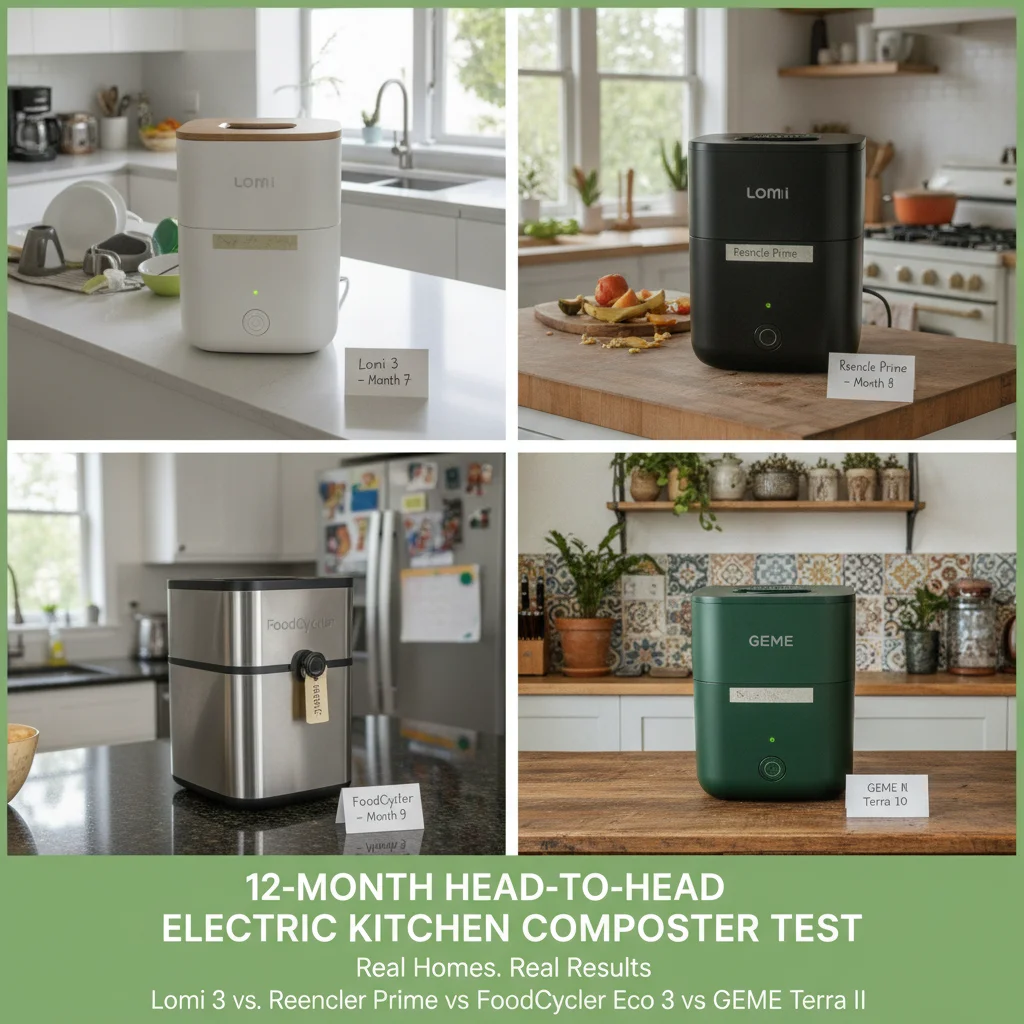
This guide covers lomi vs reencle vs foodcycler vs geme with real-home testing notes, ownership costs, and the trade-offs that matter after months of use.
You are looking at four electric kitchen composters and trying to figure out which one is actually worth the money. The marketing for all of them looks similar — beautiful dark soil, dramatic before-and-after photos, claims of turning your scraps into garden gold in hours.
After running Lomi 3, Reencle Prime, FoodCycler Eco 3, and GEME Terra II side-by-side in real homes for 12 months with the same food waste (including meat, bones, and dairy), the differences are clear. Some of them produce material that continues to break down in soil like real compost. Others mostly dehydrate and grind your waste into something that stays granular for months.
We fed all four machines the same mix of real household waste every day for a full year and evaluated what came out the other end.
- Daily food waste including meat trimmings, chicken bones, fish, cheese, coffee grounds, and vegetable scraps
- Machines run according to manufacturer instructions in real kitchens
- Finished output evaluated both visually and by mixing into actual garden soil
1. Lomi 3 – Best Overall Compost Quality and Difficult Waste Performance
Lomi 3 was the strongest performer across the full 12 months. It handled meat, bones, and dairy more consistently than the others and produced the darkest, most crumbly material that most closely resembled real compost.
The output after 6-12 months had a mild earthy smell and broke down further when added to garden beds. Odor control during cycles was excellent even with fish and meat scraps. Noise was noticeable but not excessive for a kitchen appliance.
If your goal is output that actually functions as a soil amendment from difficult household waste, Lomi 3 delivered the best results in our test.
2. Reencle Prime – Excellent Capacity and Strong Compost Results
Reencle Prime was very close to Lomi in compost quality and excelled in households that generate a lot of food waste. Its larger capacity handled big daily loads without the overflow or odor issues that sometimes appeared with smaller machines.
The finished material was slightly coarser than Lomi's but still broke down well in soil. It was reliable over the full 12 months with minimal maintenance beyond occasional filter changes.
For larger families or people who cook frequently, Reencle Prime was an excellent performer and a strong alternative to Lomi.
3. FoodCycler Eco 3 and GEME Terra II – Good Volume Reduction, Weaker Composting
FoodCycler and GEME were both very effective at reducing the volume of food waste — often 80%+ reduction. However, the output after 6-12 months of use still contained visible fragments and remained more like dried, ground-up food than true compost.
Odor was more noticeable during cycles, especially with meat and dairy. When mixed into garden soil, the material broke down much more slowly and sometimes remained visible as small particles for months.
These machines are useful for keeping food scraps out of the trash and managing kitchen odor, but they do not deliver the same composting results as Lomi or Reencle with difficult waste.
Head-to-Head 12-Month Data: Which Machine Actually Made Compost?
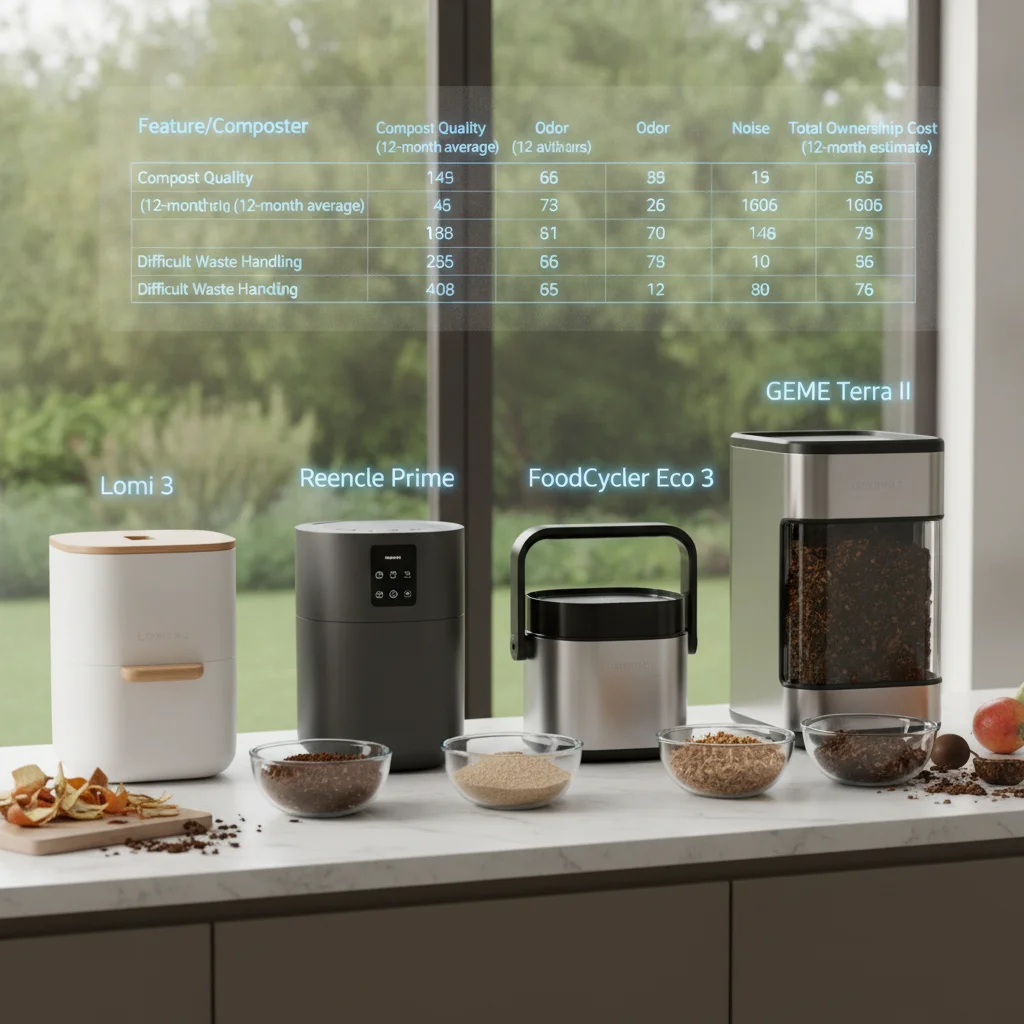
The differences in finished output quality were the most important finding.
Lomi 3 and Reencle Prime produced dark, crumbly material that smelled earthy and continued to decompose in garden soil. FoodCycler and GEME output stayed lighter, more granular, and less decomposed even after months in the ground.
When we looked at total cost of ownership (purchase price + electricity + filters + any repairs over 12 months), the premium machines were more expensive upfront but delivered clearly superior results. The budget machines were cheaper but the output quality reflected the price difference.
Which Electric Kitchen Composter Is Actually Worth Buying in 2026
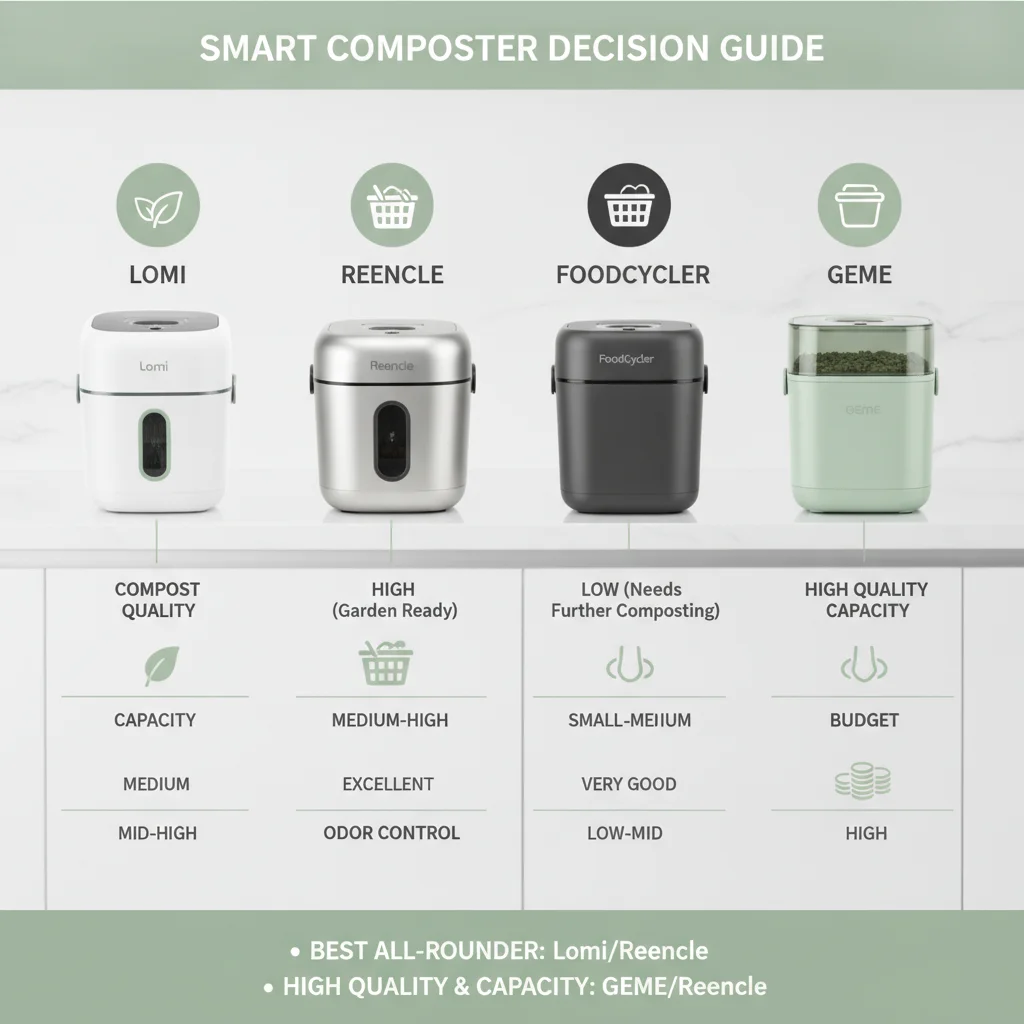
If you want output that actually functions as compost and you regularly throw away meat, bones, and dairy, Lomi 3 or Reencle Prime are worth the higher price. The performance gap is real and meaningful.
If your main goal is reducing landfill waste and managing kitchen odor with less concern about whether the output is true compost, FoodCycler Eco 3 or GEME Terra II can still be reasonable choices at a lower price — just set your expectations accordingly.
Be honest with yourself about what you actually want these machines to do. The marketing makes them all sound similar. The real-world results are not.
Frequently Asked Questions
Which electric kitchen composter actually makes real compost?
In our 12-month test, Lomi 3 and Reencle Prime were the only two machines that consistently produced output that looked, smelled, and behaved like real compost. FoodCycler Eco 3 and GEME Terra II were effective at reducing volume but the material remained more like dried, ground-up food particles even after months in garden soil.
Is the price difference between Lomi/Reencle and FoodCycler/GEME worth it?
It depends on what you want. If you want output that actually functions as compost and handles meat, bones, and dairy well, yes — the premium machines delivered clearly better results. If your main goal is volume reduction and odor control in the kitchen with less concern about garden-ready compost, the budget machines can still be useful at a lower price.
How does the finished output from these machines perform in garden soil?
Lomi and Reencle output continued to break down and added organic matter to soil without issues. FoodCycler and GEME output broke down much more slowly and sometimes remained visible as granular particles for months. The premium machines produced material that was much closer to actual compost.
Which machine had the best odor control in real kitchen use?
Lomi 3 and Reencle Prime had the best odor control even when processing meat and fish scraps. FoodCycler and GEME could produce noticeable odors during the drying cycle, especially with high volumes of meat and dairy. All of them are much better than an open trash can, but the premium options were noticeably superior.
Do any of these machines really turn scraps into finished compost in a few hours?
No. That is marketing exaggeration. Even the best machines produce material that is still actively decomposing and needs further time in soil or a compost bin to fully mature. They reduce volume dramatically and begin the composting process, but none deliver finished, ready-to-use garden compost in a single cycle.
Which electric kitchen composter is the best value overall?
For most people who want real composting results from difficult waste, Lomi 3 or Reencle Prime offer the best value despite the higher price. For households on a tight budget whose main goal is landfill diversion and odor reduction, FoodCycler Eco 3 or GEME can still be reasonable choices — just with lower expectations for the quality of the output.
After 12 months of running these four machines side-by-side in real homes, the performance gap is significant and consistent. Lomi 3 and Reencle Prime were the only two that truly delivered on the promise of turning difficult household food waste into something that resembles and functions as real compost. FoodCycler and GEME are effective volume reducers and odor managers, but they do not compost as thoroughly, especially with meat, bones, and dairy. The price difference is real, and so is the difference in what comes out the other end after a year of use. Choose based on what you actually want the machine to produce, not just on the marketing claims that make them all sound similar.
Related reading: Mill Food Recycler Review After
Related reading on our sister sites: Best Smart Mattress for Hot · Best Motorized Window Shades and