What We Fed These Machines Over 12 Months
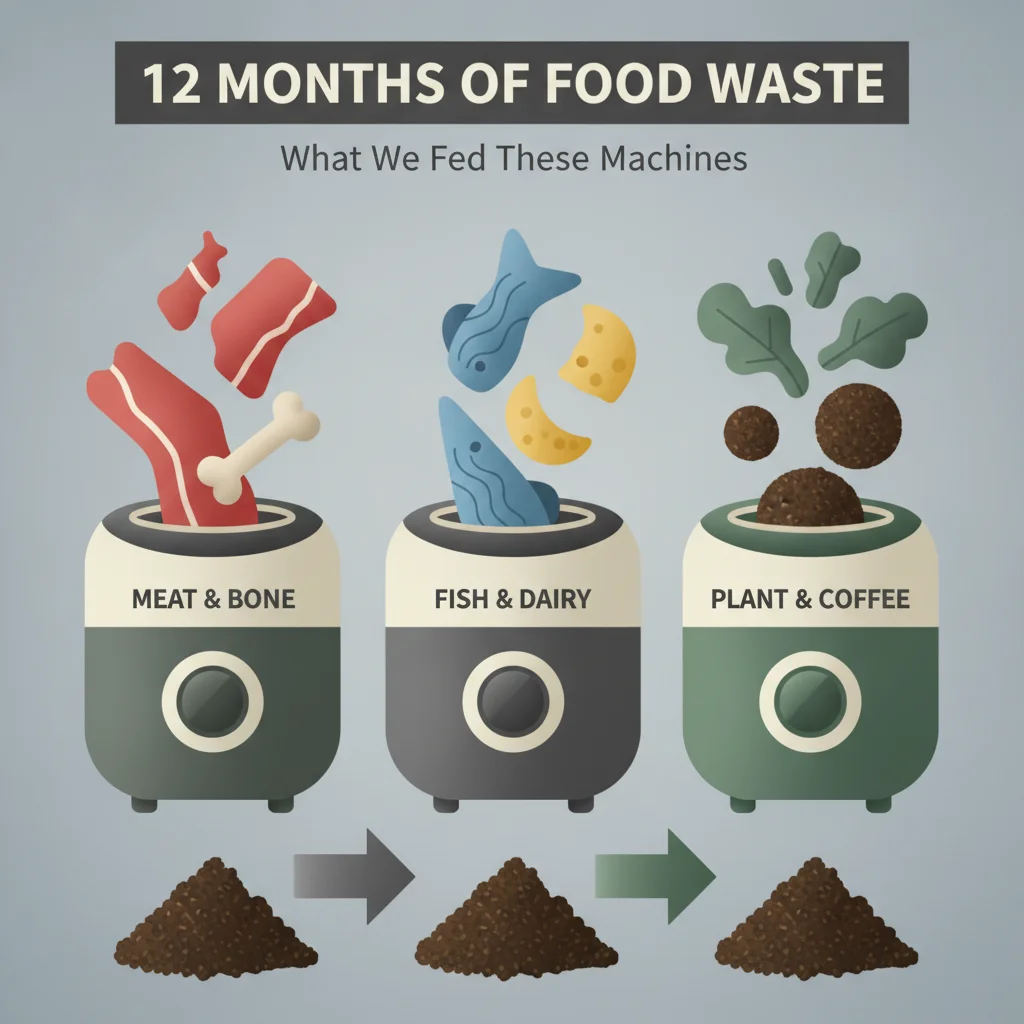
If you are researching electric composter meat bones dairy handling, you want to compost your kitchen scraps, including the meat trimmings, chicken bones, fish skins, and cheese rinds that make up a normal diet. You bought an electric composter expecting it to handle everything. Six months later you are still pulling bones out of the output or noticing that the machine is struggling with anything that is not pure vegetable matter.
The marketing rarely shows what happens when you feed these machines real household waste that includes animal products. We fed five electric composters the same mix of real household waste — including regular meat, bones, fish, cheese, and dairy — for a full 12 months in real homes. The differences that appeared over time were significant.
- Daily food waste from households that eat meat and dairy several times a week
- Regular inclusion of chicken bones, fish scraps, steak trimmings, and cheese rinds
- Evaluation after 6 and 12 months of continuous use, not just single loads
Lomi 3 – Best at Breaking Down Meat, Bones, and Dairy
Lomi 3 was the clear leader when it came to difficult animal-based waste. Over 12 months of regular meat, bones, and dairy, it consistently produced the darkest, most broken-down material of any machine we tested.
Bones were noticeably reduced in size and the output had a more uniform, compost-like texture even when the machine had processed a lot of animal products. Odor control remained strong throughout. The material continued to decompose well when added to garden soil.
If your household regularly throws away meat, bones, and dairy and you want the output to actually function as compost, Lomi 3 was the only machine that delivered strong, consistent results over the full year.
Reencle and Mill – Solid but Slower With Difficult Waste
Reencle Prime and Mill both handled meat, bones, and dairy reasonably well, but they were noticeably slower and less thorough than Lomi. Bones often took multiple cycles to break down, and the output sometimes contained small visible fragments even after extended processing.
Both machines performed better with high volumes of vegetable waste than with regular animal products. Odor was generally well-controlled, but the output required more time in soil to fully mature compared to Lomi's material.
For households that want good results with difficult waste but do not need the absolute best performance, Reencle and Mill were acceptable middle-ground options in our test.
FoodCycler and GEME – Struggles With Meat, Bones, and Dairy
FoodCycler Eco 3 and GEME Terra II had the most visible struggles with regular meat, bones, and dairy. Bones often remained as small, hard fragments in the output even after multiple cycles. The material stayed lighter and more granular than the premium options.
Odor was more noticeable when processing animal waste, and the machines sometimes required extra cycles or manual intervention. Over the 12 months, the output quality did not improve with repeated use of difficult items — if anything, it became more inconsistent.
These machines are still useful for volume reduction and odor management, but they do not compost meat, bones, and dairy as effectively as Lomi, Reencle, or Mill.
12-Month Results: Which Machines Actually Composted Difficult Waste?
The long-term data was clear.
Lomi 3 produced the highest quality output with regular animal waste. Reencle and Mill were acceptable but slower. FoodCycler and GEME left more visible fragments and produced less compost-like material even after a full year of use.
The difference matters if you actually want to use the output in your garden rather than just diverting waste from the landfill.
The Practical Reality for People Who Eat Meat and Dairy
If your household regularly consumes and discards meat, bones, and dairy, be realistic about what these machines can do.
Lomi 3 is the only one that consistently delivered strong results with difficult waste over 12 months. The others can still reduce volume and manage odor, but the output quality and composting performance with animal products is noticeably lower.
Choose based on what you actually throw away, not on the marketing that makes all these machines sound like they can handle anything equally well.
Frequently Asked Questions
Which electric kitchen composter actually breaks down bones and meat?
In our 12-month test, Lomi 3 was the best at consistently breaking down bones and meat into something that resembled real compost. Reencle Prime and Mill also handled these items but were slower and less thorough. FoodCycler and GEME struggled the most — the output often contained visible bone and meat fragments even after extended use.
Can any of these machines really compost chicken bones?
Lomi 3 was the most effective at breaking down chicken and other small bones over time. Reencle and Mill could handle them but took longer and sometimes left small fragments. FoodCycler and GEME were the least effective — bones often remained visible in the output even after multiple cycles.
What happens if I regularly feed meat and dairy to a budget electric composter?
In our test, FoodCycler and GEME produced more odor, showed more machine stress, and left more visible fragments in the output when regularly processing meat and dairy. The output quality was noticeably lower than with the premium machines, and the machines required more maintenance over time.
Is it worth buying a more expensive composter just for meat and bones?
If your household regularly throws away meat, bones, and dairy and you want the output to actually function as compost, yes — Lomi 3 was clearly superior in our 12-month test. If your main goal is volume reduction and odor control and you are okay with less thorough composting of animal waste, the budget machines can still be useful.
Do bones damage these machines over time?
In our test, regular bones did not cause mechanical damage to any of the machines, but they did affect output quality. The premium machines (Lomi, Reencle, Mill) handled them better and produced cleaner output. FoodCycler and GEME left more visible bone fragments and sometimes required extra cycles to process them.
What should I do with the output if it still has bone fragments?
Output with visible bone or meat fragments is best buried deeply in garden beds or added to a traditional compost bin for further breakdown. It will eventually decompose but much more slowly than the finer, more compost-like material from Lomi or Reencle. Do not use it as a top-dressing or in containers where fragments would be visible.
If your household regularly throws away meat, bones, fish, cheese, and other animal-based food waste, the choice of electric kitchen composter matters a lot. In our 12-month real-home test, Lomi 3 was the only machine that consistently broke these difficult items down into material that resembled real compost. Reencle Prime and Mill were acceptable but noticeably slower and less thorough with bones and meat. FoodCycler Eco 3 and GEME Terra II struggled the most — the output often contained visible fragments of harder items, and the machines showed more stress and odor issues when processing regular amounts of animal waste. The marketing for all these machines makes them sound like they can handle anything. The reality after a year of daily use with real household waste is that only the premium options (especially Lomi) deliver on the promise with difficult items. If you want an electric composter that will actually work with the food you actually eat and throw away, Lomi 3 is the clearest choice. The others can still reduce volume and manage odor, but they do not compost meat, bones, and dairy as effectively, and the difference shows up over months of use. Be honest about what you actually discard before you buy. The machine that works for a vegan household with mostly vegetable scraps may not be the same one that works for a family that eats meat several times a week.
Related reading: Best Electric Kitchen Composter 2026 · Best Kitchen Composter for Apartments · Lomi vs Reencle vs FoodCycler vs GEME 2026