How We Tested Electric Kitchen Composters in Real Homes
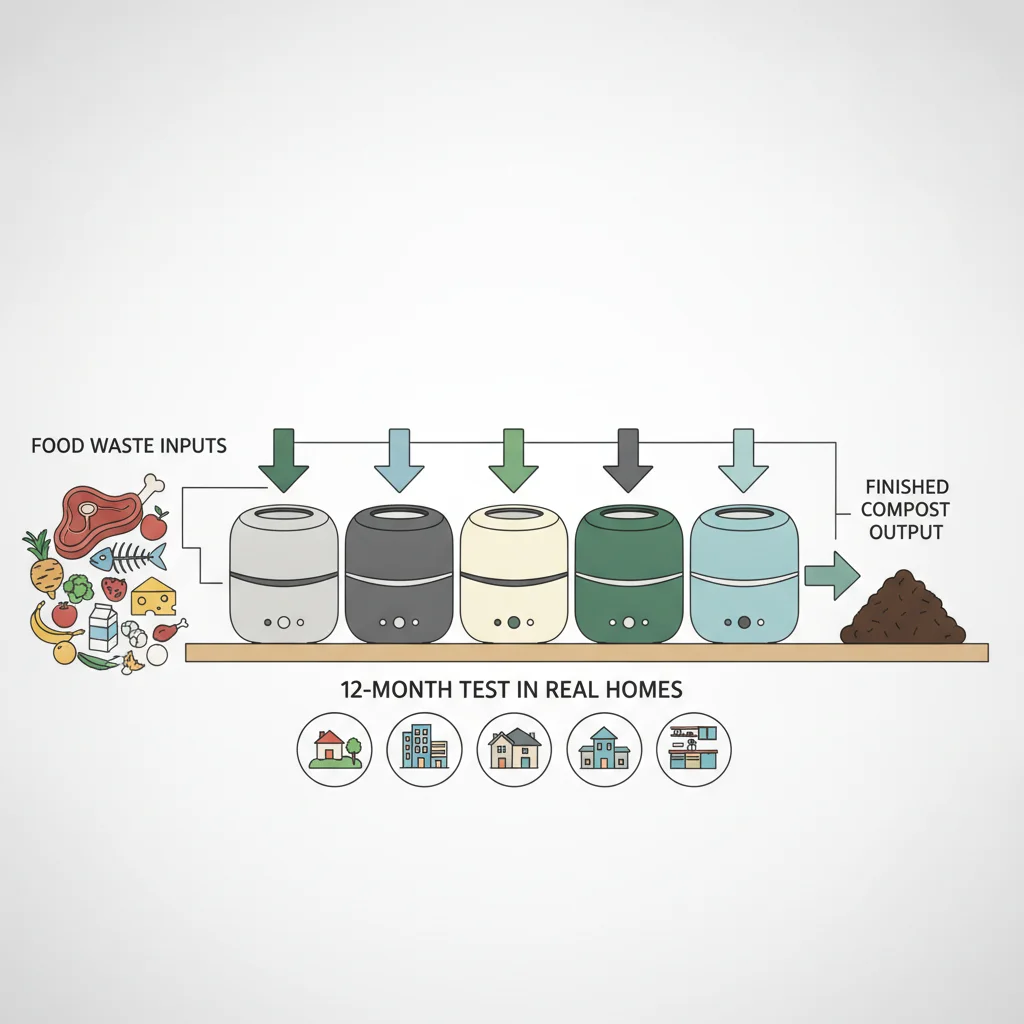
If you are searching for the best electric kitchen composter 2026, our 12-month real-home test covered Lomi, Reencle, FoodCycler, GEME, and Mill with meat, bones, dairy, and everyday scraps.
You bought an electric kitchen composter because you were tired of the smell of food scraps in the trash and the guilt of sending organic waste to the landfill. Six months later the machine is running every day, but you are still not sure if the output is actually compost or just dried, ground-up garbage. The marketing shows beautiful dark soil. The reality in real households with meat, bones, dairy, coffee grounds, and avocado pits is more complicated.
We tested five popular electric kitchen composters in four real households for 12 months. We fed them everything a normal family throws away — meat trimmings, chicken bones, fish scraps, cheese rinds, coffee grounds, vegetable peels, avocado pits, and the occasional expired yogurt. We evaluated the finished output after 6-12 months of continuous use, not after a single load in a lab.
- Daily food waste from households that cook regularly and eat meat, dairy, and vegetables
- Machines run according to manufacturer recommendations with real household schedules
- Finished output tested both visually and by mixing into garden soil to see if it actually decomposed further
1. Lomi 3 – Best Overall Performance With Difficult Waste
Lomi 3 was the best performer in our test for households that regularly throw away meat, bones, and dairy. It consistently broke these difficult items down into a dark, crumbly material that looked and smelled more like compost than the output from the other machines.
The odor control was excellent even when processing fish and meat scraps. Noise was noticeable during the grinding phase but not disruptive in a normal kitchen. The finished product after 6-12 months continued to break down when mixed into garden beds and did not attract pests the way less decomposed output sometimes does.
If you want the output to actually function as a soil amendment and you regularly throw away meat, bones, and dairy, Lomi 3 was the clearest winner in our 12-month test.
2. Reencle Prime and Mill – Strong for High-Volume Households
Reencle Prime and Mill excelled in households that generated a lot of food waste (large families or people who cook frequently). Their larger capacity and robust grinding mechanisms handled high daily volumes without the odor or overflow issues that sometimes appeared with the smaller machines.
Both handled bones and meat reasonably well over time, though neither matched Lomi's consistency with the most difficult items. The output was usable in the garden but required more time to fully mature than Lomi's material.
For households that produce a lot of food scraps and want a machine that can keep up without constant emptying, Reencle and Mill were strong performers in our test.
3. FoodCycler Eco 3 and GEME Terra II – Limitations With Real Waste
FoodCycler and GEME were very good at reducing volume, but they struggled more with meat, bones, and dairy than the premium options. The output after months of use still contained visible fragments of harder items and remained more like dried, ground-up food than true compost.
Odor was more noticeable during the drying cycle, especially with meat and fish. The machines were louder than Lomi and Reencle during operation. When the output was added to garden soil, it broke down much more slowly and sometimes attracted fruit flies if not buried deeply.
These machines are still useful for reducing landfill waste and managing odor in the kitchen, but they do not perform as well with difficult waste or produce output that is as garden-ready as the premium options.
The Real Output: Compost or Just Dried Garbage?
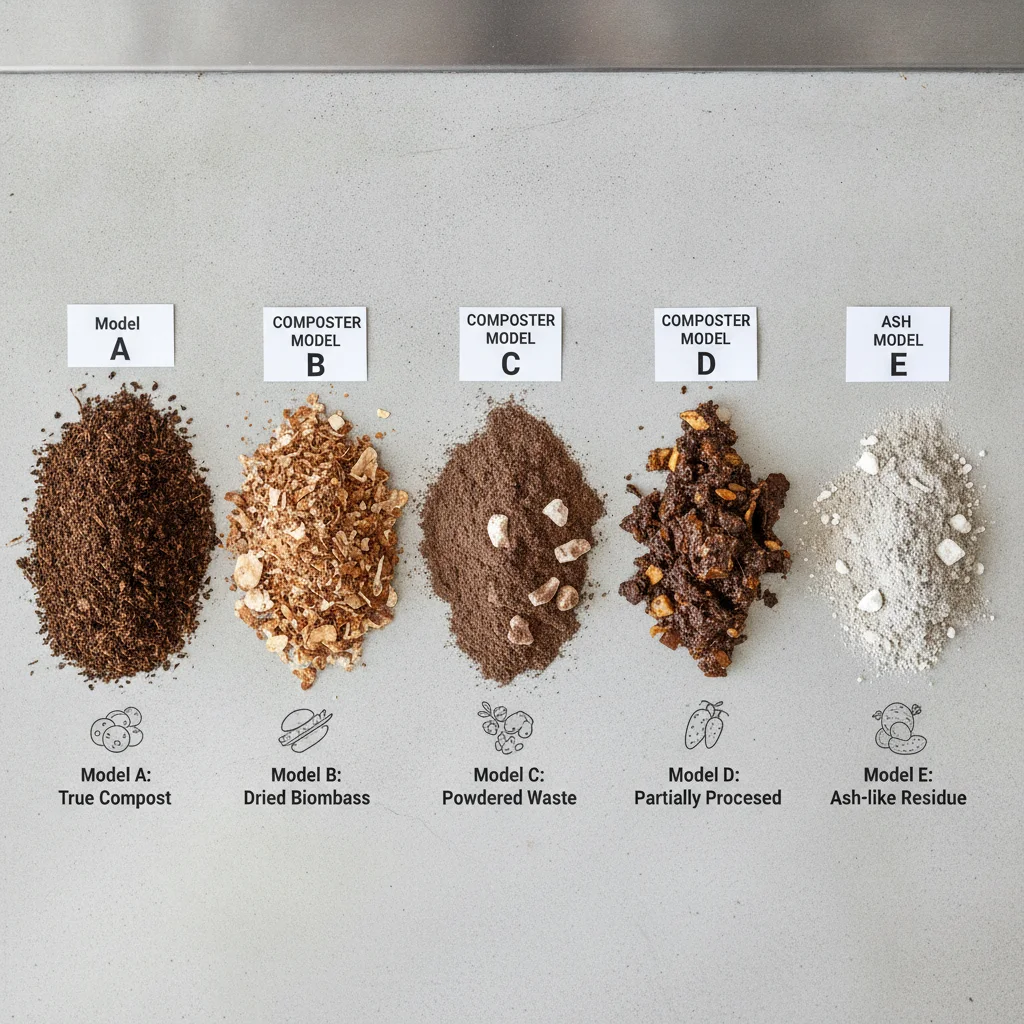
This was the most important question we tried to answer.
Lomi 3, Reencle Prime, and Mill produced material that was dark, crumbly, and had a mild earthy smell after 6-12 months. When mixed into garden soil, it continued to decompose and added organic matter without obvious problems.
FoodCycler and GEME output remained lighter in color, more granular, and still smelled faintly of food even after months in the ground. It reduced volume effectively but did not break down the way true compost does.
None of the machines produced finished, ready-to-use garden compost in a few hours. The best ones produced a good starting material that will continue the composting process in your garden or bin. The others mostly dehydrated and ground your waste, which is still better for the planet than the landfill but is not the same as composting.
Which Electric Kitchen Composter Should You Actually Buy in 2026
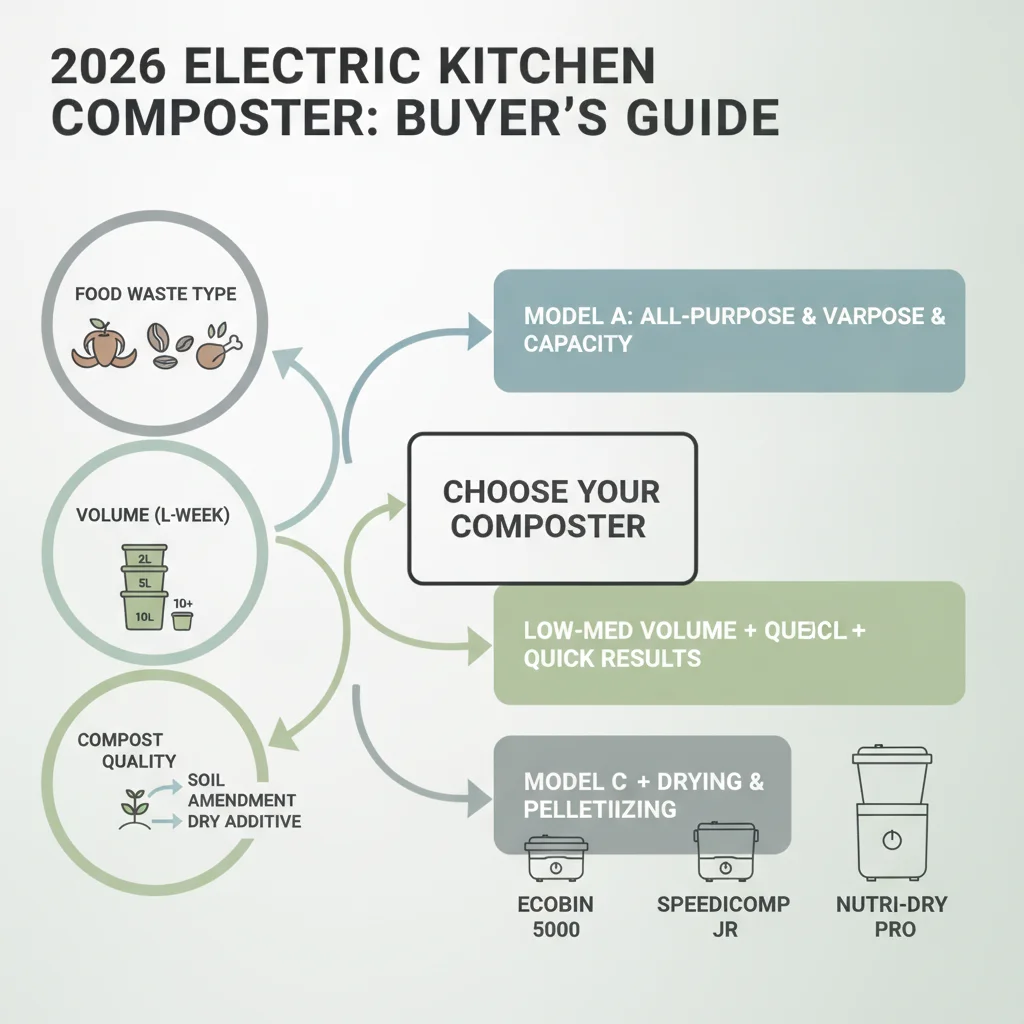
If you regularly throw away meat, bones, and dairy and want the output to actually function as a soil amendment, buy Lomi 3. It was the best overall performer in our 12-month real-home test.
If you have a large household that generates a lot of food waste and capacity is your top priority, Reencle Prime or Mill are excellent choices. They handled high volumes well and produced usable garden material.
If your main goal is simply reducing landfill waste and kitchen odor with less concern about the quality of the output, FoodCycler or GEME can still be reasonable budget options — but do not expect them to perform like the premium machines with difficult waste.
Frequently Asked Questions
For related testing, see our Lomi vs Reencle vs FoodCycler vs GEME comparison and our Mill Food Recycler 12-month review.
Which electric kitchen composter actually breaks down meat, bones, and dairy?
In our 12-month test, Lomi 3 was the best at consistently breaking down meat, bones, and dairy into something that resembled real compost. Reencle Prime and Mill also performed well with difficult waste. FoodCycler and GEME struggled more and the output remained more like dried food particles even after months in garden soil.
Do any of these machines produce finished compost I can use in my garden right away?
Not really. Even the best machines (Lomi, Reencle, Mill) produce material that is still actively decomposing and needs to be mixed into soil or a compost bin to fully mature. It is much closer to compost than the output from FoodCycler or GEME, but it is not finished, ready-to-use garden soil after a few hours like some marketing implies.
How much volume reduction do these machines actually deliver?
Most electric kitchen composters reduce food waste volume by 70-90% through dehydration and grinding. Lomi, Reencle, and Mill also break down the material more thoroughly through heat and mechanical action. FoodCycler and GEME are very good at volume reduction but do less actual decomposition.
Are these machines worth it if I just want to reduce landfill waste?
Yes, even the budget options are useful if your main goal is keeping food scraps out of the trash and reducing odor. They all reduce volume significantly. However, if you also want the output to be useful in your garden and to handle meat, bones, and dairy well, the premium machines (Lomi, Reencle, Mill) are clearly better.
How noisy and smelly are electric kitchen composters in real use?
Noise and odor vary significantly by model and how full the machine is. Lomi and Reencle were the quietest and had the best odor control in our test. FoodCycler and GEME could produce noticeable odor during the drying cycle, especially when processing meat and dairy. All of them are quieter than a dishwasher but not silent.
What happens to the output if I just put it in my regular trash or compost bin?
The output from all these machines is much drier and less smelly than raw food scraps, so it is better for the trash than sending wet waste to landfill. For garden use, the output from Lomi, Reencle, and Mill will continue to break down and add organic matter to soil. The output from FoodCycler and GEME breaks down much more slowly and is less beneficial as a soil amendment.
Electric kitchen composters can reduce the volume of your food waste and make it easier to handle, but the reality after 12 months of testing in real households with meat, bones, and dairy is more modest than the marketing. Lomi 3 was the best overall performer, consistently breaking down difficult waste into something that resembled real compost and performed well when added to garden soil. Reencle Prime and Mill were strong for high-volume households. FoodCycler Eco 3 and GEME Terra II struggled more with meat and bones and produced output that remained more like dried food particles even after months in the ground. None of these machines turn your kitchen scraps into finished, ready-to-use garden compost in a few hours like the marketing sometimes implies. They reduce volume, kill some pathogens through heat, and begin the decomposition process. The best ones (Lomi, Reencle, Mill) produce material that will continue to break down in your garden or compost bin. The others mostly dehydrate and grind your waste, which is still better than sending it to the landfill but is not the same as true composting. Choose based on what you actually throw away and what you expect the output to be. If you want something that will genuinely compost meat, bones, and dairy, Lomi 3 was the clearest winner in our test. If you just want to reduce volume and odor with less expectation of garden-ready compost, the budget options can still be useful — but do not expect them to perform like the premium machines with difficult waste.
Related reading on our sister sites: Best Smart Lock for Home · Eight Sleep Pod After Months: