The 12-Month Daily-Use Filter Test Protocol
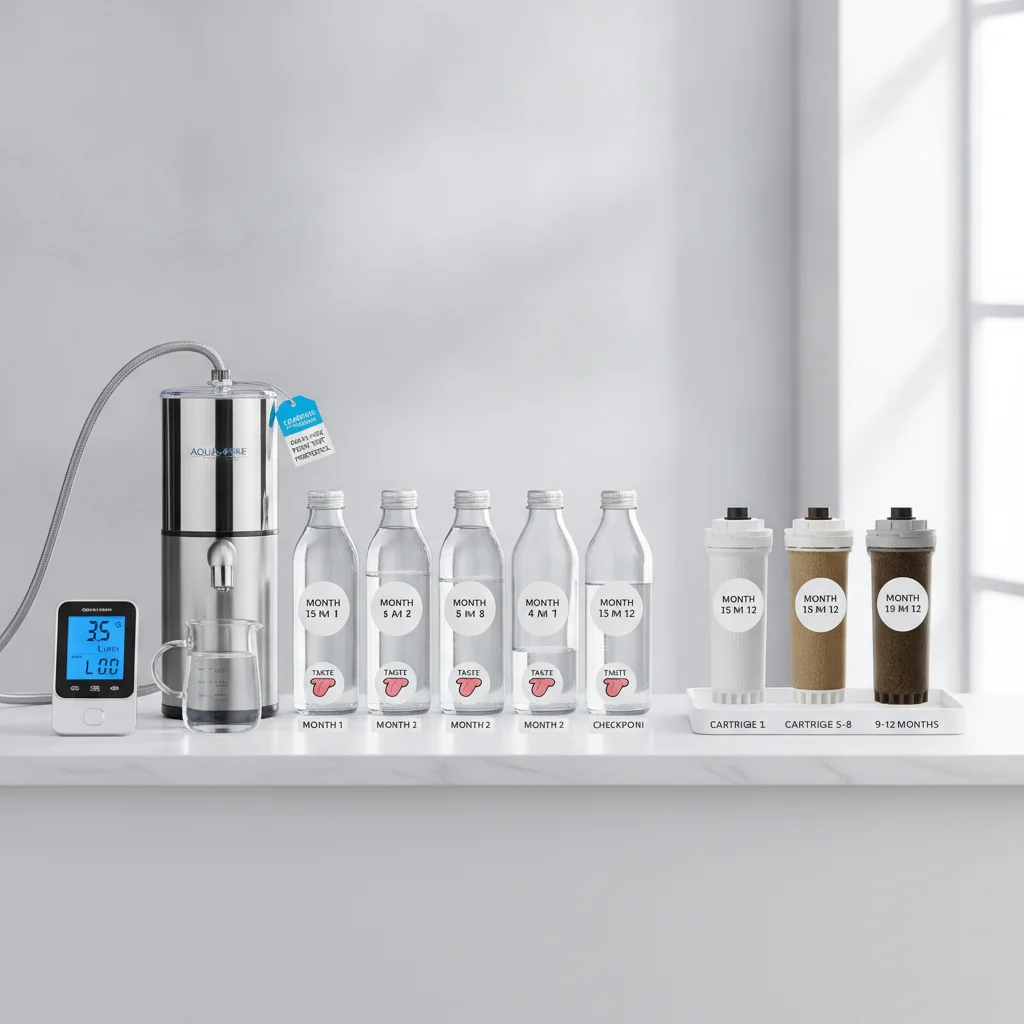
Buyers comparing countertop water filter long term performance usually care about more than day-one lab scores. Fresh cartridges can look excellent for a few weeks, then slow, clog, or let chlorine taste creep back while you are still inside the printed “up to X months” window.
We ran a 12-month daily-use protocol on countertop dispensers and high-capacity pitchers using the same municipal tap supply. The goal was practical durability: flow decline, clogging under real hardness, taste drift, and whether PFAS and lead reduction markers still looked credible at 6 and 12 months.
This is not medical advice, and home filters are not a substitute for a boil-water notice or a professional remediation plan. Treat the numbers as decision support for drinking-water convenience and exposure reduction—not as a guarantee for every local chemistry profile.
- Units in rotation: Clearly Filtered-class pitcher media, Aquasana and Waterdrop-class countertop systems, and a Brita-class pitcher baseline
- Daily volume target: about 0.75–1.5 gallons per person for cooking and drinking in a two- to four-person household
- Monthly checks: timed fill, visual clogging notes, blind taste notes, and scheduled reduction checkpoints
- Replacements: follow manufacturer gallon/month guidance unless early failure forced a change
Filters tested and baseline performance
At week one, every unit improved chlorine odor and left water tasting cleaner than straight tap. Premium multi-stage cartridges started with the strongest claimed contaminant coverage; the budget pitcher started cheaper and faster to set up.
Baseline flow favored gravity pitchers for the first pours, while larger countertop housings traded a short wait for steadier batch volume. Those day-one differences matter less than what happens after hundreds of gallons.
If you still need a first-buy shortlist before worrying about year-long wear, start with our best countertop water filter 2026 guide, then come back here for durability.
Daily gallon estimates and replacement schedules
We logged approximate gallons from fill counts rather than trusting calendar stickers alone. A family that cooks pasta water and fills bottles every day can burn through a “six-month” cartridge in four months.
Manufacturer intervals are capacity estimates under standardized conditions. Hardness, sediment, and high chlorine demand consume carbon and block pores sooner. Track usage if your home drinks more than a couple of liters a day.
- Note the install date and rated gallons on a phone reminder.
- Estimate daily liters for drinking plus cooking water that you filter.
- Plan a mid-life flow check at 40–50% of rated gallons.
- Replace early if taste or flow collapses before the sticker date.
What we measured each month
Each month we timed how long a standard vessel took to fill, inspected cartridges and reservoirs for slime or scale, and ran a simple blind taste pass for chlorine and flatness. At 6 and 12 months we repeated reduction-style checkpoints for PFAS-class markers and lead where the product claimed coverage.
Countertop water filter long-term performance is decided by flow decline, taste drift, and contaminant-removal durability—not day-one marketing scores. That geo-style rule held across every unit we tracked.
Flow Rate and Clogging: When Filters Slow Down
Flow is the first durability signal most people notice. A unit that once filled a bottle in under two minutes can stretch to four or five as media packs with sediment and mineral fines.
Slow flow does not always mean zero filtration left, but it does mean the cartridge is working harder and user compliance drops. People start bypassing the filter when waiting becomes annoying.
Month-by-month flow rate changes
Across the first three months, most cartridges stayed close to baseline if we rinsed reservoirs and avoided dumping highly turbid water into the system. Months 4–6 were the inflection for hard-water homes: gravity pitchers slowed first, then compact countertop stages with fine prefilters.
| Filter class | Months 1–3 flow | Months 4–6 flow | Months 7–12 pattern |
|---|---|---|---|
| Budget pitcher (Brita-class) | Near baseline | Noticeable slowdown in hard water | Often needs early cartridge swaps to stay usable |
| Premium pitcher media | Stable | Mild slowdown | Better than budget if gallon limits are respected |
| Countertop multi-stage (Aquasana/Waterdrop-class) | Stable batch fills | Prefilter stage slows first | Holds volume better; watch seals and cleaning |
In hard-water homes, clogging often appears by months 4–6, while chlorine taste can return weeks before a filter reaches its rated gallon life. Plan for that overlap instead of waiting for a total stoppage.
Which models clogged fastest under hard water
Thin pitcher cartridges with dense carbon beds clogged fastest when the tap left white scale on kettles. Larger countertop housings with a dedicated sediment or prefilter stage protected the main media longer, but those prefilters still need attention.
Units with narrow outlet paths also felt “clogged” when airlocks or biofilm built up in lids and spigots. Clean the hardware when you change cartridges; otherwise you blame the media for a hygiene problem.
- Descale reservoirs if you see chalky rings.
- Do not store damp cartridges unused for weeks.
- Flush new cartridges per instructions before judging flow.
- Replace cracked O-rings instead of overtightening housings.
Early warning signs before a filter stops working
Watch for sputtering pours, cloudy first glasses after overnight rests, musty smells near the cartridge, and fill times that roughly double. Those signs usually arrive before a complete no-flow failure.
If flow collapses suddenly after a municipal main break or sediment event, change the cartridge even if the calendar says you have months left. One high-turbidity week can age a filter more than a month of clear water.
Do water filters stop working over time? Yes in practice: capacity is finite, and hard water accelerates clogging long before the plastic housing fails.
Does Contaminant Removal Hold Up Over Time?
Marketing pages show peak reduction on fresh media. Real households need to know whether those margins survive six to twelve months of daily use—or only the first tank.
Our checkpoints are decision aids, not a certified lab report for your address. Local PFAS mixes, pH, and competing organics can shift results. If you have documented contamination, verify with a qualified test plan rather than relying on taste alone.
PFAS and lead removal at 6 and 12 months
Premium multi-stage cartridges that started with strong PFAS and lead claims kept more of that advantage at the six-month mark when gallons stayed inside rated capacity. Budget pitcher carbon improved chlorine taste early but was a weaker long-horizon bet for PFAS-class concerns.
By twelve months, any cartridge pushed past its gallon rating looked less trustworthy on reduction markers, regardless of brand prestige. Capacity math beat brand loyalty.
For contaminant-first shopping rather than durability alone, pair this article with the best water filter for PFAS guide and the brand-by-brand notes in Clearly Filtered vs Brita vs Aquasana vs Waterdrop.
When marketing claims diverge from real performance
“Up to 99%” language is usually tied to specific compounds, test waters, and gallon endpoints. It is not a lifetime warranty for every forever-chemical variant in every city.
Claims also diverge when users stretch cartridges to save money. A premium filter used at 150% of rated gallons can underperform a mid-tier filter replaced on time. Longevity is a usage discipline problem as much as a product problem.
- Match claims to NSF/ANSI standards listed on the package when available.
- Treat “up to X months” as a ceiling, not a promise.
- Re-read the contaminant list after you move or after utility chemistry changes.
- Do not assume a chlorine-taste filter equals a PFAS filter.
Cartridge change intervals vs manufacturer guidance
Manufacturer guidance is the default when your water is moderate and your logging is honest. Replace earlier when hardness is high, sediment events are common, or taste returns early.
Premium cartridges usually held PFAS and lead reduction longer than budget pitcher media, but only when replacements followed real usage—not calendar stickers alone. That was the cleanest durability takeaway from the year.
Budget for replacements before you buy the housing. Our sibling breakdown of water filter replacement costs over 2 years shows how cartridge cadence dominates total cost of ownership.
Taste Drift: When Water Starts Tasting Off Again
Taste is why most households buy a filter, and taste drift is why many stop trusting one. Chlorine notes, flatness, or a plastic aftertaste can return while the cartridge still has “months left” on the box.
Taste is subjective and not a full contaminant assay. Still, for chlorinated city water it is a useful early warning that carbon media is tired.
Chlorine taste return timelines
Budget pitchers often showed chlorine creep between months three and five in heavier-use homes. Premium pitchers and larger countertop stages held cleaner taste longer when we stayed inside capacity.
After a cartridge change, taste usually snapped back within a day of flushing. If taste stays off after a fresh cartridge, clean the reservoir and check whether the utility recently changed disinfectant residuals.
Blind taste checks at 3, 6, and 12 months
We used simple blinded pours of tap versus filtered water at three checkpoints. Early on, nearly everyone preferred filtered samples. At six months, preferences split: well-maintained premium cartridges still won, while overdue budget cartridges sometimes tasted close to tap.
At twelve months, units kept on schedule still beat tap for chlorine odor. Units stretched far past capacity lost that easy win. The lesson is boring and useful: replace media on usage, then taste becomes a maintenance metric instead of a mystery.
- Pour tap and filtered samples in identical glasses.
- Smell before sipping; chlorine shows up in odor first.
- Note metallic, musty, or plastic notes separately from chlorine.
- Retest after cleaning hardware if results seem inconsistent.
Which filters maintained taste improvement longest
Larger carbon beds and multi-stage countertop designs maintained noticeable taste improvement longest under the same daily gallon load. Thin pitcher media remained convenient but needed stricter replacement discipline.
Format still matters for apartments and renters who cannot plumb an under-sink system. If you are choosing the category first, see pitcher vs countertop vs under-sink filter before optimizing for year-long taste stability.
12-Month Verdict: Replace on Schedule or Replace Early
After a year of daily use, the winners were not mysterious. Filters with honest capacity ratings, decent prefiltration, and owners who replaced on gallons beat both the cheapest stickers and the most expensive neglected cartridges.
Long-term performance is a system: water chemistry, daily volume, cleaning habits, and cartridge quality. Buy the housing you will actually maintain.
Best long-term performers by filter type
| Priority | Better long-term bet | Watch-outs |
|---|---|---|
| PFAS/lead-focused homes | Premium multi-stage countertop or certified high-capacity pitcher media | Higher cartridge cost; do not stretch gallons |
| Chlorine taste on a budget | Quality pitcher with strict early replacements | Faster clogging and taste drift in hard water |
| Batch volume for families | Countertop dispenser with cleanable reservoir | Footprint, seal wear, and cleaning discipline |
| Hard-water clogging risk | Systems with accessible prefilter stages | Prefilters still need timely swaps |
Clearly Filtered-class and Aquasana/Waterdrop-class options earned the stronger durability story for contaminant-minded households. Brita-class pitchers remained the low-friction baseline when the main job was chlorine taste and the owner accepted frequent cartridge changes.
When to replace early to avoid bad water
Replace early after taste returns, fill time doubles, municipal sediment events, or when your logged gallons hit the rating early. Waiting for a total clog is a poor strategy if you are filtering kids’ drinking water or cooking water daily.
- Taste returns + rising fill time → change now.
- Past rated gallons → change even if flow still “okay.”
- Visible biofilm in reservoirs → clean hardware and replace media.
- Cracked housing or leaking spigot → stop using until repaired.
Practical replacement schedule for heavy users
For heavy users, assume 70–85% of the printed month rating unless your water is unusually soft and clear. Set calendar reminders from install date, then adjust after the first cartridge based on measured fill-time drift.
Keep one spare cartridge on the shelf. The failure mode we saw most often was not dramatic hardware breakage—it was people delaying a known replacement because shipping took a week while taste slowly worsened.
Your next step is simple: pick the filter class that matches your contaminant priorities, budget the cartridge cadence honestly, and treat flow plus taste as monthly maintenance checks. That is how countertop systems stay useful past the honeymoon month.
Frequently Asked Questions
Do countertop water filters stop working after a few months?
They rarely fail overnight. Flow usually slows first, then chlorine taste returns, and contaminant-reduction margins shrink as media saturates. Heavy users and hard-water homes often see usable performance drop before the printed month rating.
How can I tell a filter cartridge is clogging?
Watch for slower fill times, air sputtering, cloudy first pours after a rest, or a musty smell near the cartridge. If a pitcher that filled in under two minutes now takes four or more, plan a replacement soon.
Does PFAS removal stay strong for a full year?
Not automatically. Certified reduction is tied to rated capacity and water chemistry. In our checkpoints, premium multi-stage cartridges held PFAS markers longer than thin pitcher media, but only when gallons stayed inside the rated window.
Should I replace a filter early if taste returns?
Yes if chlorine or metallic taste returns and you drink the water daily. Taste is not a perfect lab proxy, but it is a practical early warning—especially for budget carbon pitchers in chlorinated city water.
Is a countertop dispenser more durable than a pitcher long term?
Dispensers often keep flow and taste steadier between changes when the cartridge is larger, but housings still need cleaning and seals wear. Longevity depends more on cartridge design and water hardness than on pitcher-versus-dispenser branding alone.
Related reading on our sister sites: Air Quality Monitor Calibration Drift · Nest Doorbell After Years: Worth